English (UK)
 Español
 Deutsch
 Français

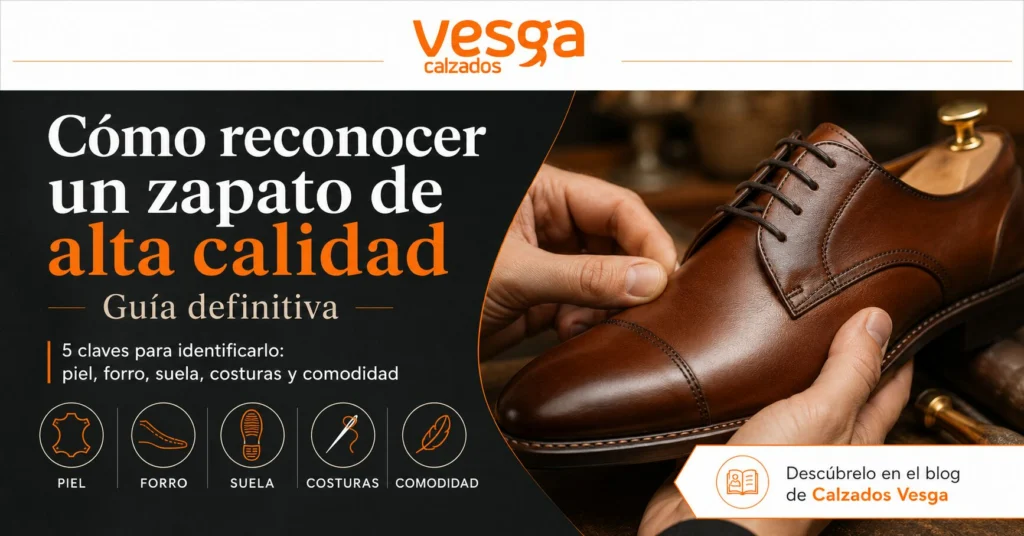
How to recognise a high-quality shoe: the complete guide
Some shoes look wonderful in the shop window and disappoint by the second month. Others don't catch your eye at first, yet years later they are still in your wardrobe looking as good as ever. The difference between them is not the price, or at least not always. It is the quality of the materials, the care taken in construction and respect for the anatomy of your foot. Three things you can learn to spot in under two minutes, with your hands, without being a master shoemaker.
In short: A high-quality shoe stands out for three essential things: full-grain natural leather in the upper, a continuous lining without harsh seams and a sole of even density. These elements decide whether the shoe will last.
At Calzados Vesga we have been choosing what goes on the shelves of our shop on the Plaza Mayor in Burgos since 1971. That selection criterion, built up over decades of dealing directly with manufacturers and suppliers, is what we explain here so you can recognise a high-quality shoe.
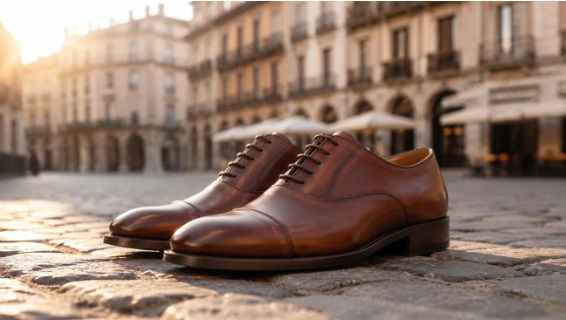
What makes a high-quality shoe?
A quality shoe balances three things: honest raw materials, careful construction and a last that respects your foot. If any one of them fails, the shoe fails, however much it costs or whatever brand is stamped on the sole.
The global footwear industry is worth around 400 billion euros a year, according to industry reports from Statista, and a large part of it relies on the appearance of quality rather than real quality. Finishes that shine on day one and crack within a month. Leathers that smell of tanning but are corrected grain coated in polyurethane. Soles that sound hollow when you tap them with a knuckle. Choosing a high-quality shoe is not difficult once you look at its essential components. You just need to know where to look.
1. Checking the leather of a high-quality shoe
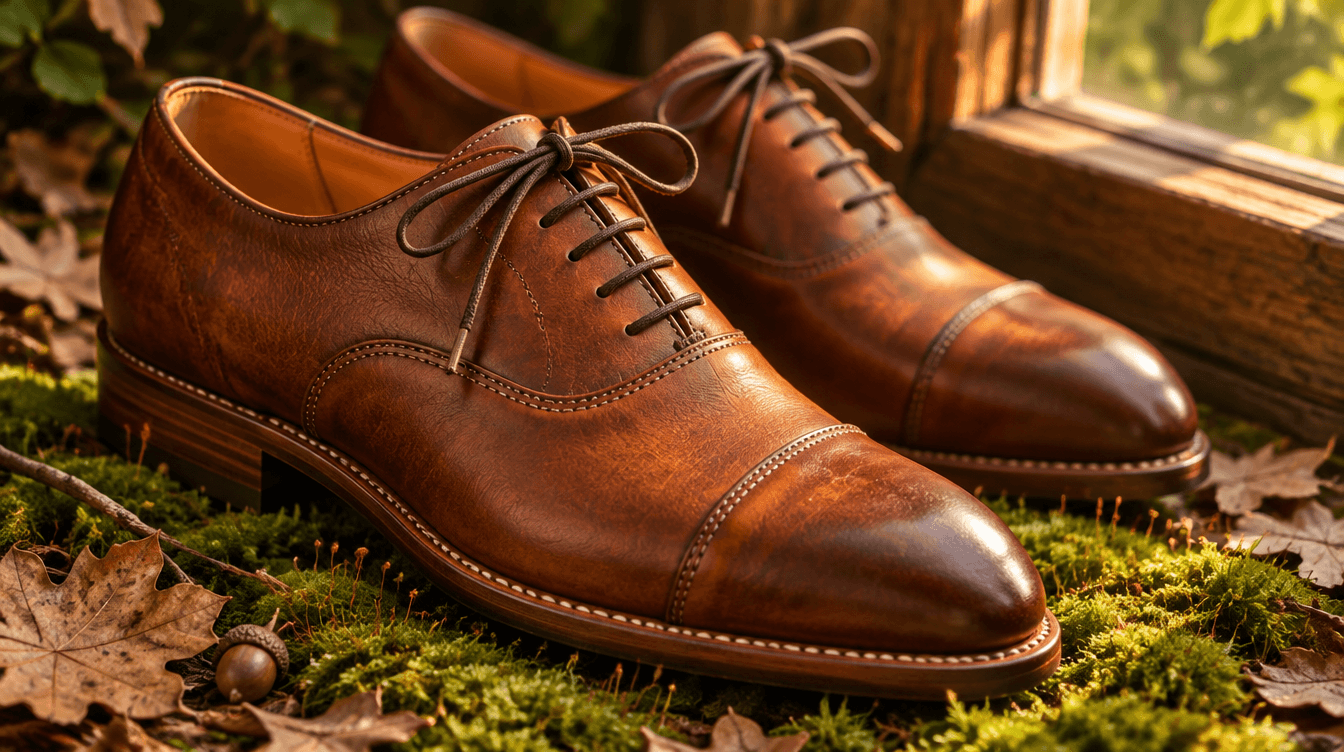
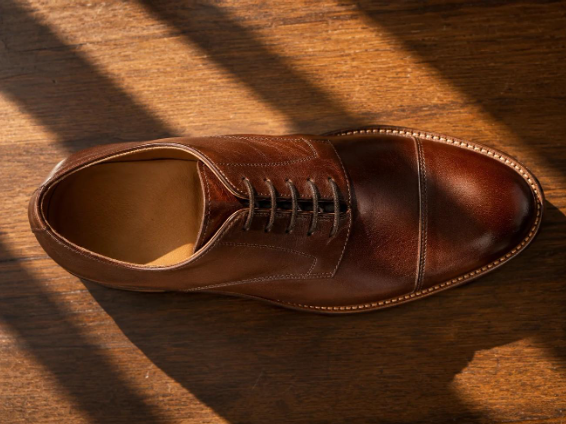
Full-grain natural leather feels silky, flexible and warm to the touch. When you bend it, it forms natural concentric creases. Synthetic material or corrected-grain leather feels cold and stiff and forms brittle folds.
When you pick up the shoe, run your thumb over the upper. The surface of a high-quality shoe feels silky, flexible and naturally warm. If it feels cold, stiff or plasticky, you are looking at a synthetic material or a low-grade corrected leather.
The second test is the flex test. Gently bend the upper with your hands. Good leather forms natural concentric creases. Poor leather or synthetics form brittle folds, as if they were about to break.
What they don't tell you: Many mid- to low-priced shoes have a thin layer of real leather over a synthetic base. They fool you to the touch. With wear, the top layer separates and the shoe looks ruined within a few months.
→ You may also like: A practical guide to caring for leather shoes
2. The lining of a quality shoe
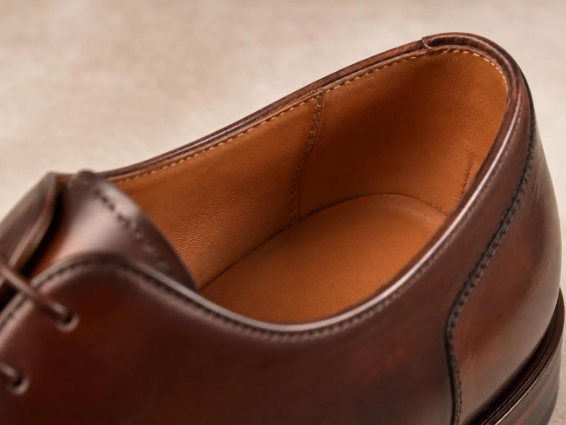
A quality lining is made of leather (sheepskin or calfskin) over the whole inside of the shoe, perfectly smooth, without wrinkles or air pockets. Synthetic linings trap heat and make your feet sweat during long wear.
A manufacturer who wants to cut costs has two options: cut back on the outside, which the customer sees, or on the inside, which goes unnoticed until after the purchase. Most choose the second. If you put your hand inside and feel irregularities, rougher areas or protruding seams, those flaws are exactly what will rub your foot for hours. A good high-quality shoe never neglects its inside.
3. How to check the sole for strength
Place the shoe on a flat surface and look at it from behind: the heels should sit completely flat. Press the sole with your thumb: it should feel solid but springy, without sinking. The join between sole and upper should be precise to the millimetre.
Now press the sole with your thumb. It should feel solid but springy, without sinking as if it were hollow. A genuine leather sole also breathes in a way rubber cannot match in dress shoes. Vulcanised natural rubber is excellent for casual and outdoor shoes, giving the durability you expect from a high-quality shoe.
The line where the sole meets the leather upper should be precise to the millimetre. Glue residue, misalignment or air gaps give away an assembly process without human quality control.
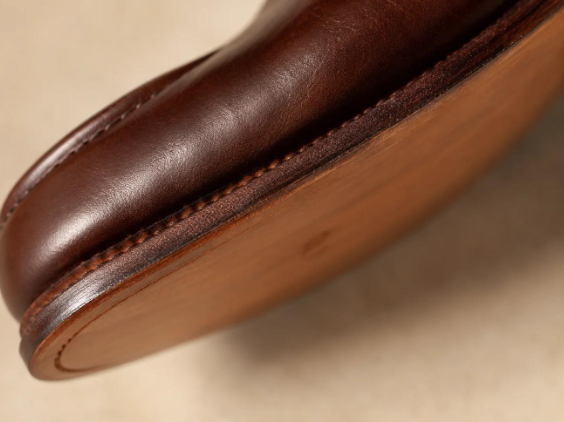
4. Stitching and symmetry in top-quality footwear
In a well-made shoe, the stitches are regular and the same size, with no skipped stitches or frayed threads. Placed side by side on a table, the two shoes should be symmetrical. Asymmetry leads to posture problems.
Stitching is the shoemaker's real CV. Examine the stitching on the upper under direct light. To make sure you are buying a high-quality shoe, check that the stitches are regular, the same size and without skipped stitches.
Put the pair on a table and look at them from above. Both should be perfectly symmetrical. If there is visible asymmetry, there will be asymmetry when you wear them, and that has a direct effect on how you walk.
5. Comfort from the first fitting: a clear sign
A well-designed shoe should be comfortable from the first time you wear it. A firm fit at the heel, room for your toes, an arch that supports without pressing. If you feel pressure at any particular point, that model is not for you.
A correct anatomical design gives a firm fit at the heel, with no slipping. The toe box should have enough room for your toes to move freely. Recognising a high-quality shoe means insisting on this comfort straight away, with no compromises.
In our shop in Burgos we always say the same thing: if a shoe doesn't convince you when you try it on in the shop, don't buy it hoping it will give. Comfort is not a negotiable whim; it is technical information from your body.
→ Expert tip: keep them looking like new with our shoe care and maintenance products
Brand vs product: real selection criteria
A brand with history is only a relative guarantee. Some well-known labels outsource production using the same low-cost materials as an unknown brand. The right approach is to judge the shoe by its materials, not by its logo.
Smart shoppers learn to judge a shoe for what it is. An unbranded shoe that meets the requirements of a high-quality shoe (full-grain leather, sheepskin lining and a vulcanised rubber sole) is worth far more than a designer shoe made of synthetics with visible glue.
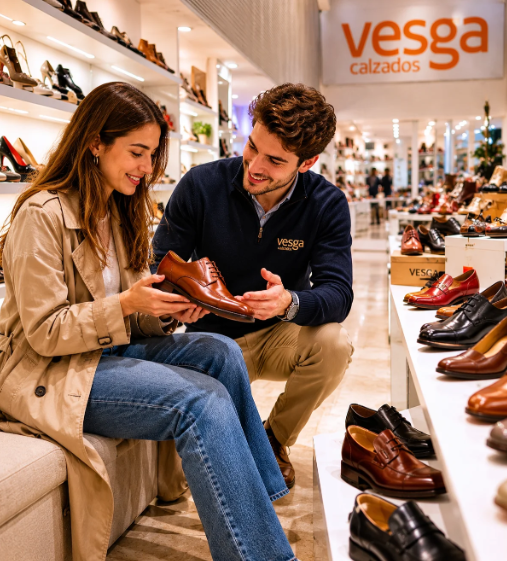
At Calzados Vesga we personally select every brand in our catalogue using exactly these criteria: verifiable materials, a known manufacturing process and proven comfort. No model gets in unless it meets the standards of a genuine high-quality shoe.
Frequently asked questions about shoe quality
How can I tell if a shoe is real leather or synthetic?
Run your thumb over the upper: natural leather feels warm, slightly irregular and naturally flexible. Synthetic material feels cold, uniform and stiff. If you can see the cut edge, real leather shows fibres; synthetic material shows a clean, even cut.
Which is better, a leather sole or a rubber sole?
It depends on the use. A leather sole is ideal for dress shoes: it breathes, looks good and can be repaired. Vulcanised rubber is better for heavy use, rain and uneven surfaces. A high-quality city shoe can perfectly well have a rubber sole if it is well made.
Does a quality shoe have to be expensive?
Not necessarily. There are excellent options with real leather, a good lining and solid construction that are not expensive. A high price does not guarantee a high-quality shoe; honest materials and careful manufacturing do.
How long should a quality shoe last?
A well-made, well-cared-for shoe can last for many years. Full-grain leather improves with wear. Leather soles can be replaced. The parts of a high-quality shoe are not thrown away: they are repaired, which makes the purchase pay off.
What should I look for when buying shoes online?
If you are after a high-quality shoe, look for key terms in the product description: ‘full-grain leather’, ‘sheepskin or leather lining’, ‘leather or vulcanised rubber sole’. If the listing only says ‘leather’ without further detail, it is usually corrected grain. Buy from specialist shops that describe the materials precisely.
Conclusion: buying well is a skill
Recognising a high-quality shoe doesn't require expert knowledge. It requires knowing what to touch, what to look at and what to ask. With the five points in this article (leather, lining, sole, stitching and immediate comfort) you already have a good eye for it.
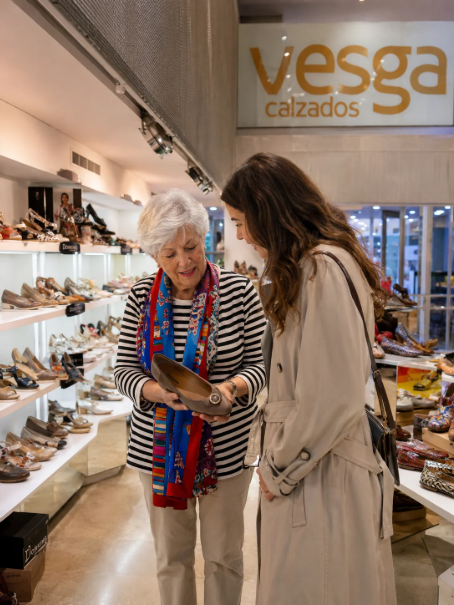
If you want to put it into practice in person, you will find Calzados Vesga on the Plaza Mayor in Burgos and at calzadosvesga.com. We have been doing exactly this since 1971: choosing what is worth it for you and explaining why.
Our team has years of hands-on experience with the product and will tell you the truth, even if that means telling you the model you like is not right for your foot.